


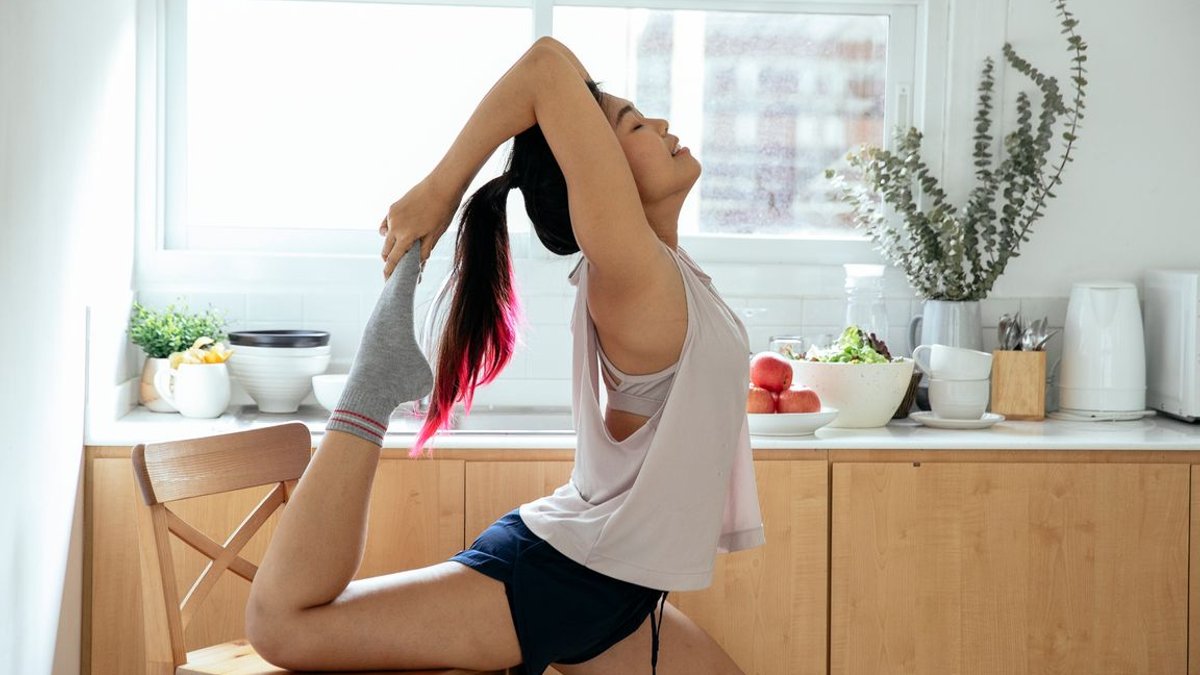
Chandra namaskāra, or moon salutations, is a lesser-known yoga practice that differs from the more popular sūrya namaskāra, or sun salutations. While sūrya namaskāra is typically practiced in the morning to energize the body and mind, chandra namaskāra is practiced in the evening to promote introspection and calmness.
A yoga practitioner who teaches chair-based yoga found that chandra namaskāra can be adapted to this style of practice, making it more accessible to those who may not be able to perform traditional yoga poses. This practitioner notes that there is no “right” or “wrong” way to practice salutations, and that the focus should be on honoring how the body feels in the moment.
Adapting Chandra Namaskāra to Chair Yoga
The practitioner’s interpretation of chandra namaskāra for chair yoga involves a series of movements that are done in a slow and meditative manner. The practice begins with the arms raised above the head, then moves into a series of poses that involve bending and stretching, including utkata konāsana, utthita parsvakonāsana, and trikonāsana.
Read Also: Swimmers struggle with front crawl breathing basics
Throughout the practice, the focus is on moving slowly and in time with the breath, which helps to activate the parasympathetic nervous system and promote relaxation. The practitioner emphasizes the importance of listening to the body and not pushing past any discomfort or pain.
The practice involves a series of inhalations and exhalations, with each movement done in sync with the breath. For example, the practitioner inhales while raising the arms above the head, then exhales while creating space between the feet and lowering the arms. This slow and deliberate movement helps to promote a sense of calm and focus.
Key Movements in Chandra Namaskāra
The practice includes a range of movements, including urdhva hastāsana, utkata konāsana, and ashta chandrāsana. Each movement is done in a slow and controlled manner, with a focus on breathing and relaxation. The practitioner notes that the goal is not to perfect the movements, but to allow oneself to feel into the poses and notice how they affect the body.
Read Also: Autumn’s slower pace sparks emotional reckoning in UK
As the practice continues, the movements become more fluid and natural, with the body moving in a slow and flowing manner. The practitioner emphasizes the importance of taking time and not rushing through the practice, allowing the body to fully experience each pose and movement.
The movement sequence includes inhaling while bringing the left forearm to rest on the left thigh, and raising the right arm over the head, keeping the left leg bent and extending the right leg. The practitioner then exhales, lowering the left hand down to a block, and raising the right arm up to the sky.
Physical Benefits of Chandra Namaskāra
In addition to its mental and emotional benefits, chandra namaskāra also has a number of physical benefits. The practice of moving from side to side, as well as up and down, can help to improve flexibility, coordination, and balance. This can be especially beneficial for individuals who are looking to improve their overall physical health and well-being.


